
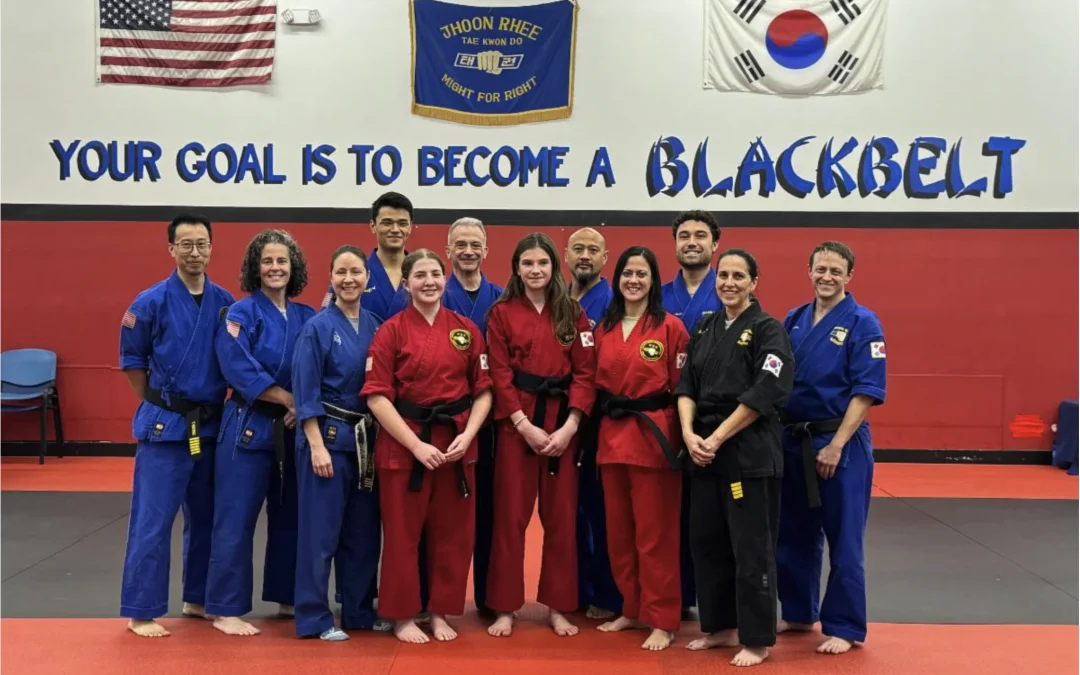
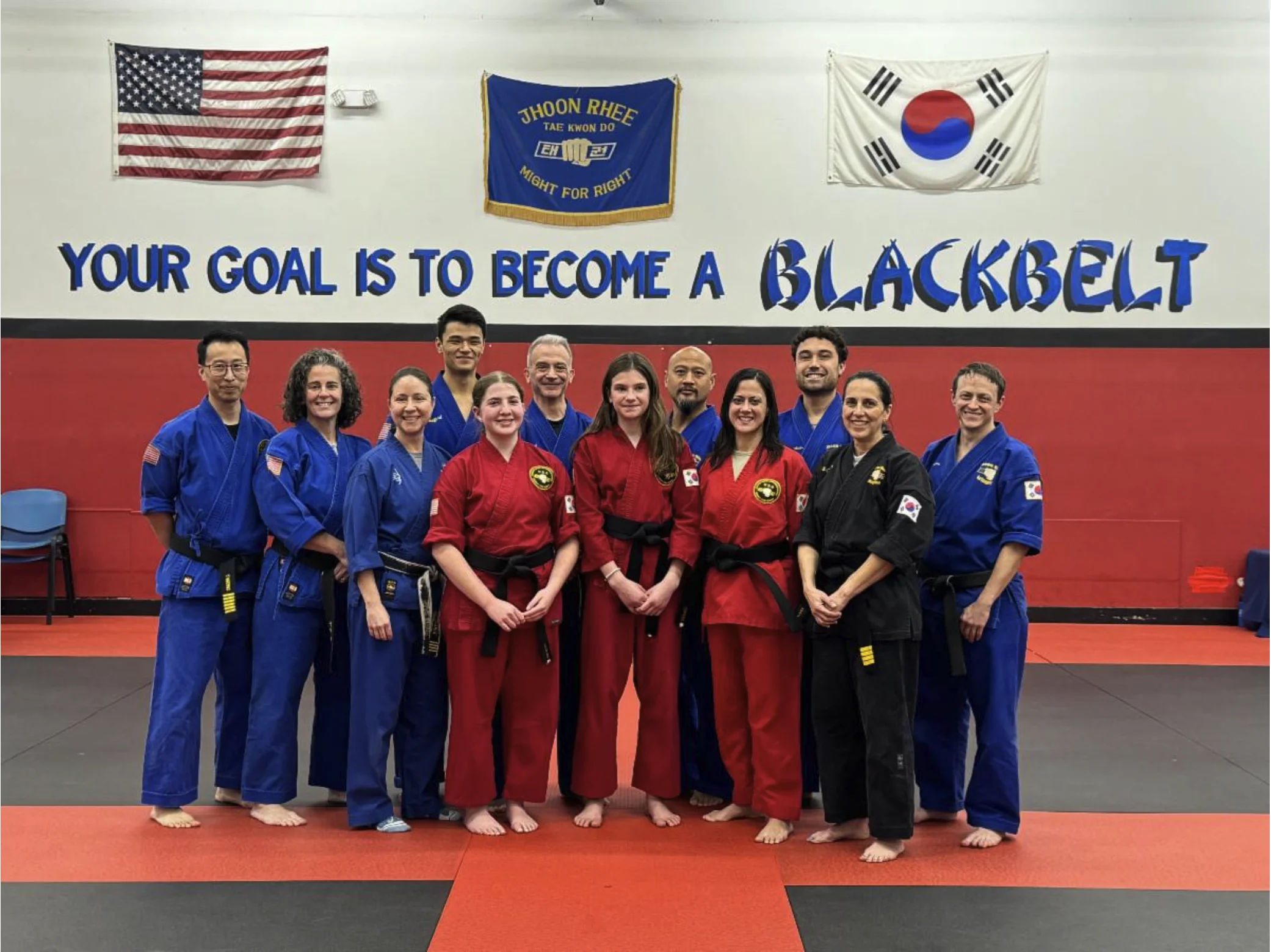
We pride ourselves in helping each student achieve their goals and developing their mental and physical strength. This is what attaining a Jhoon Rhee Tae Kwon Do Black Belt requires.
For some of our candidates this journey to Black Belt began in our Knee High Ninja Program, when they were only four years old!
This month, these candidates passed our Arlington Qualifier and the Panel Exam in front of the Jhoon Rhee Masters from Arlington and Falls Church. Our candidates persevered and we would like to present and congratulate our newest Jhoon Rhee Tae Kwon Do Black Belts!
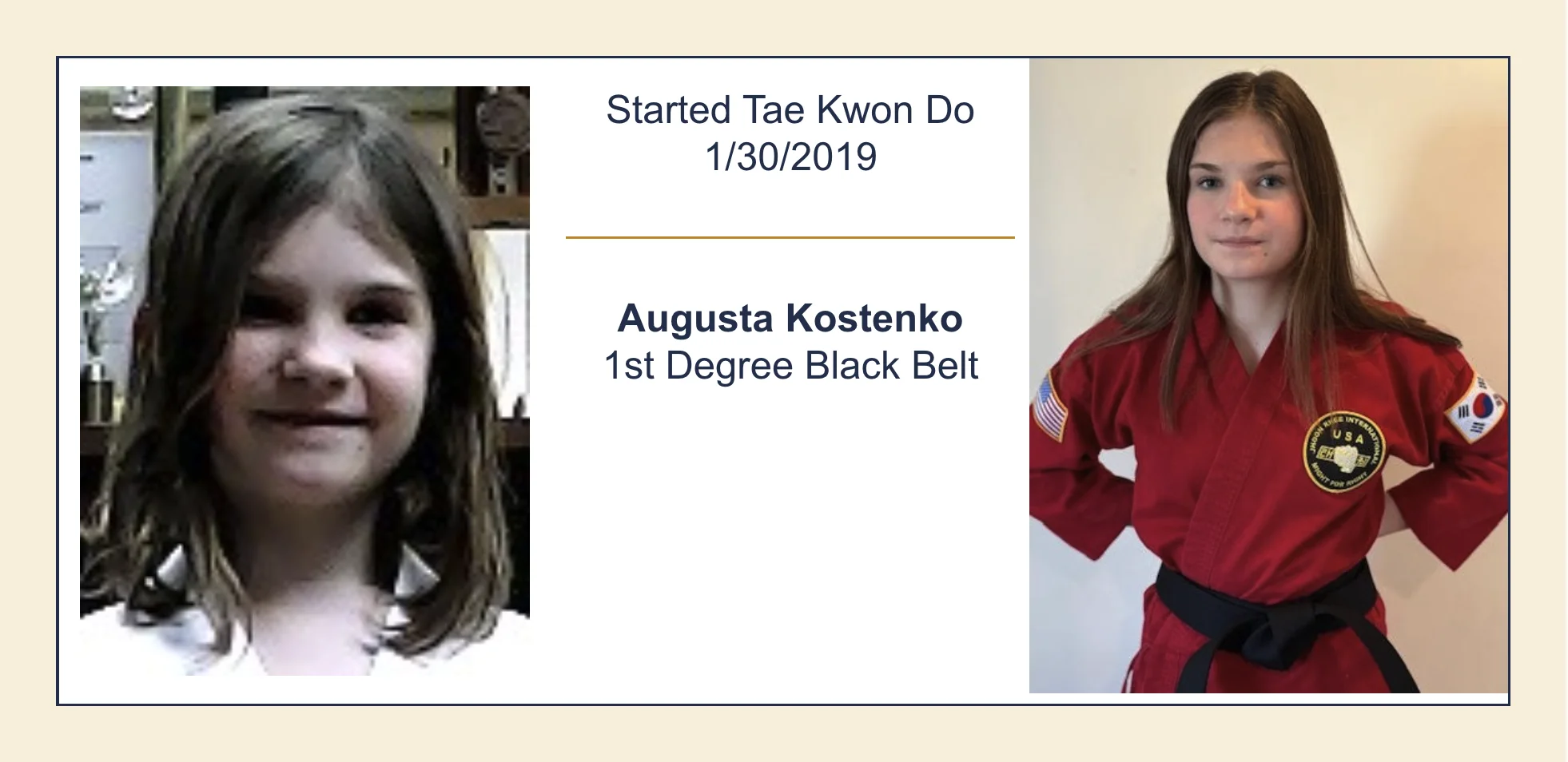
“I first began Jhoon Rhee TaeKwonDo at six years old. I would pass by the studio on the way to ballet, and I always admired how perfectly they moved and how strong they were. When I joined taekwondo, I was nothing like those brown and black belts. I could barely do five push-ups, let alone with good form, and my stamina was terrible. I was an average kid. I could run for soccer and do some strength exercises, but once I started TaeKwonDo, my endurance went right up. I could now push myself to the limit in my other sports. Slowly but surely, after every class and every set of push-ups, my muscles grew stronger. I was able to do 20, then 30, then 40, and finally 50 push-ups in under two minutes. My newfound strength from taekwondo has helped me more than I ever imagined. I have OCD. It makes me feel like I have to do certain things, such as saying things repeatedly, avoiding certain spots, or performing specific actions. Not only did these things make me feel embarrassed in public, but they also took away energy from important parts of my life. I started taekwondo at six years old to now, as I prepare to test for my black belt, I have noticed a huge difference in myself. It is safe to say that my experience in TaeKwonDo has helped me fight OCD more than I ever expected. Now, with my OCD under control, I can focus on schoolwork , where I now have straight A’s, and on making friends. I can be myself and find people that I love to be with.”
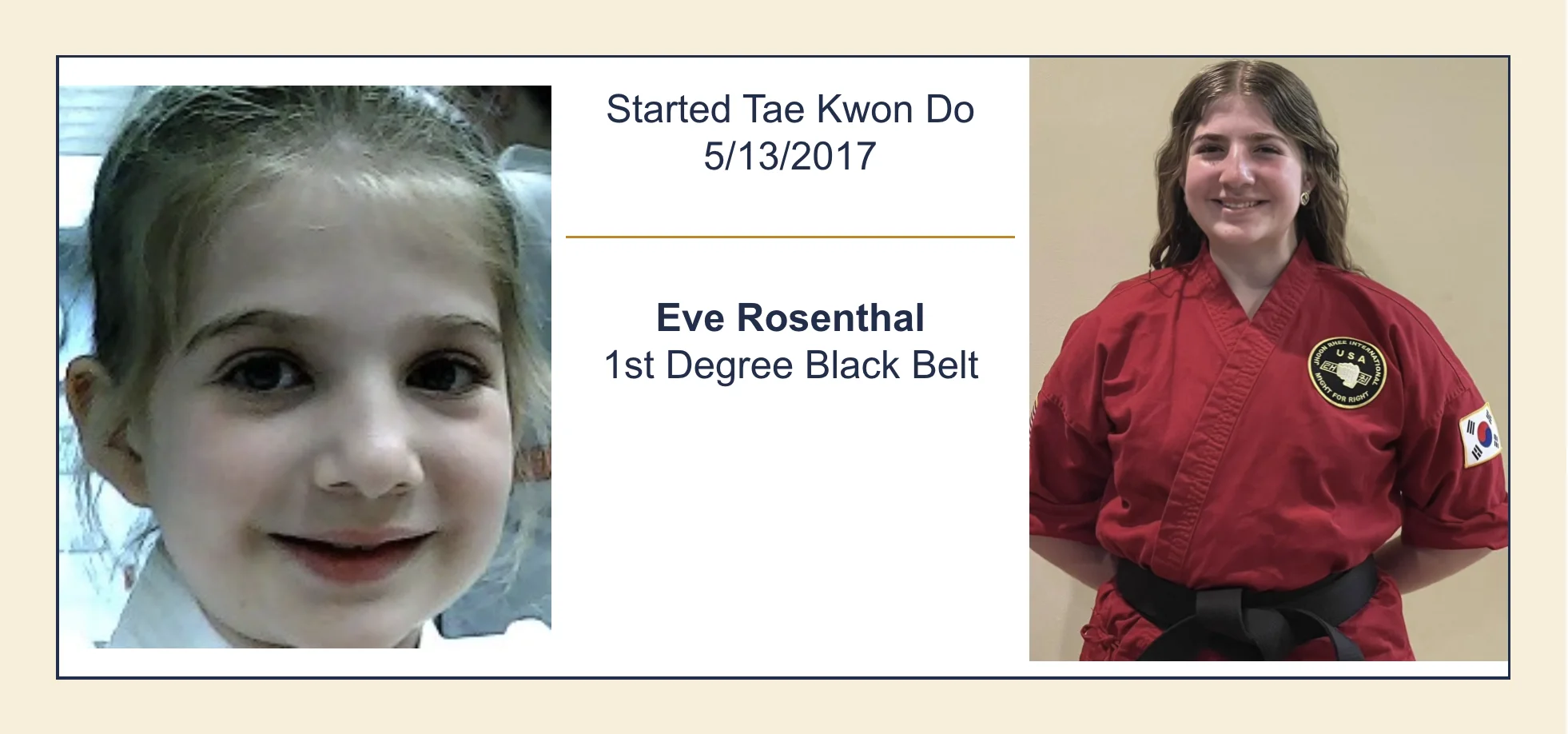
“Another aspect of myself that Jhoon Rhee Taekwondo has done for me is my confidence. I was also terrified of speaking to people I didn’t know. I always spoke quickly and quietly, trying to get my words out as efficiently as possible. This changed as I progressed through the belts. Through yelling at the end of every combination and form and loudly reciting the student creed at the beginning of every class, I slowly became less scared of speaking louder. Now, I pride myself in my confidence. In taekwondo, I yell, I ask questions in class, and my curriculum looks way stronger since I am now confident in my movements. Confidence also helps me as a helper in Jhoon Rhee’s adaptive program, which is what initially drew me into taekwondo. Confidence allows me to clearly dictate instructions to my students, and they’re more likely to listen to me if I am confident in what I am telling them to do. This has also improved my relationship with my brother, William, who participates in the program. Outside of taekwondo, my confidence helps me in many aspects of my life. At school, I can project and speak clearly during presentations, and I participate in class by asking and answering questions. In social situations, my confidence allows me to disagree with my friends and peers without feeling unsure. I speak with clarity and am confident in almost everything I say. I am now confident enough to go somewhere by myself if I want to, instead of relying on a friend’s presence. In dance, confidence makes everything better. When I am not confident in skills I am about to attempt, they never succeed. However, when I know that I can do a skill or at least am confident in my ability to try, the results are much more favorable. In addition, I now hold a leadership position on my school’s dance team this year, and I plan to for my next two years of high school. I also have held two leadership positions within my youth group this year. In the fall, I was treasurer, and this spring I am the Vice President of Jewish Enrichment. I would not have had the confidence to participate in these leadership opportunities if not for Jhoon Rhee Taekwondo. Thank you to my parents for supporting me throughout my taekwondo career, as well as my siblings and friends. Thank you to my instructors for teaching me everything I know and helping me grow.”
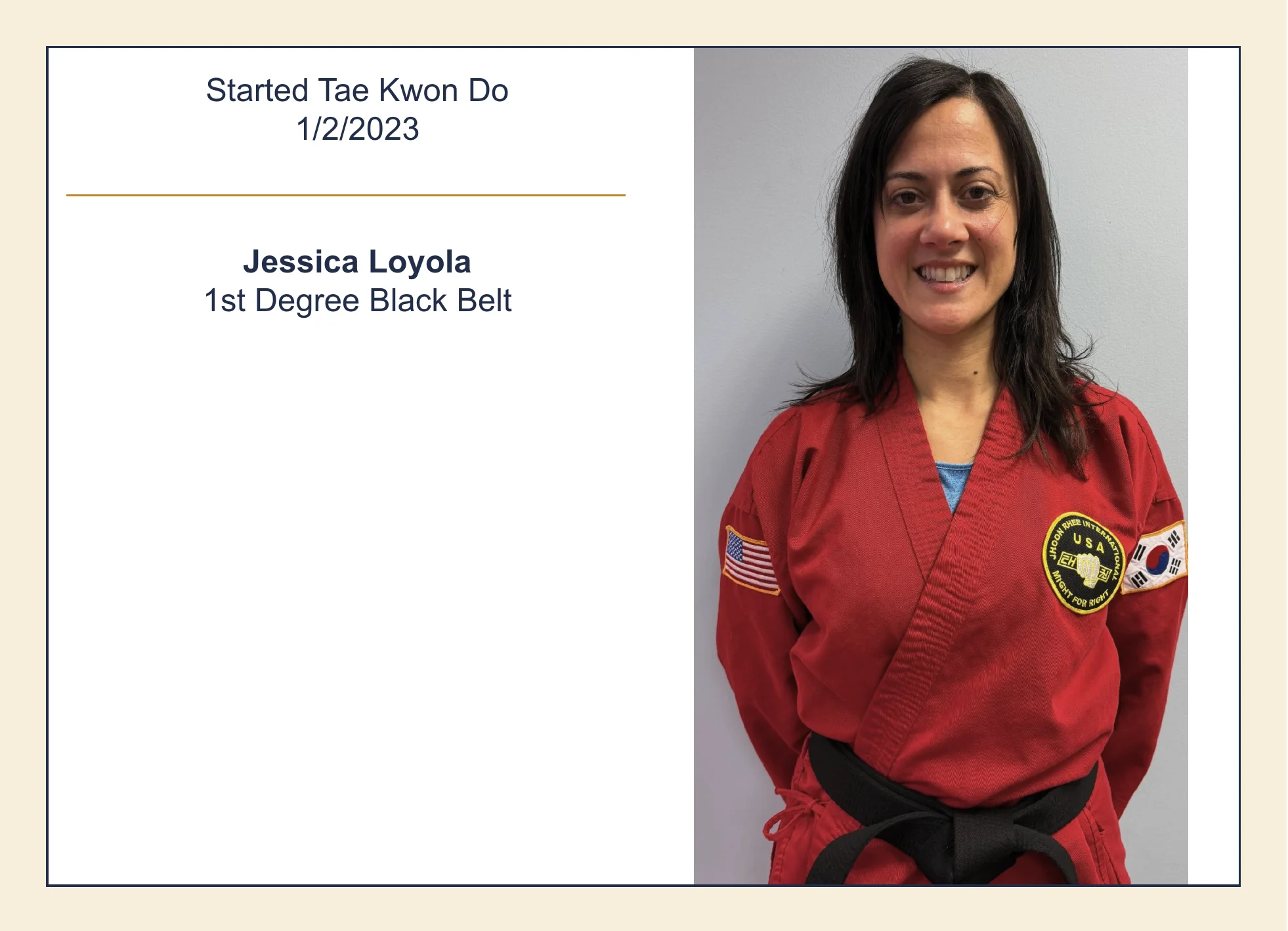
“I’m almost 48 years old. At this point in my life, staying healthy is my priority– This involves my mind, body, and spirit.
My Mind: Jhoon Rhee TKD has set a great example when it comes to planning and executing goals. They say a black belt is a white belt that never quit. This is met by establishing smaller goals on the way to the more significant goal in life. This is how I got here. I’ve done it to lead my team at my challenging work, and its amazing to count and recognize all we achieved at the end of the year. I excel at work.
My Body: My investment in Jhoon Rhee Arlington has paid off great dividends. Health evaluations have found me more fit than 80% of women my age, and at the 90th percentile of women with very low health risk.
A Jhoon Rhee instructor said that TKD requires the engagement of over 98% of the muscles in your body. My lower back has taken a toll with the sports I’ve done in my life. Jhoon Rhee exercise and flexibility requirements have strengthened my lower back and I’ve seen great improvement! I used to wake up every morning with sciatic nerve pains, and it was difficult to execute menial things, such as brushing my teeth, tying my shoes, and so on. I also felt like I was not in control of my body!
My Spirit – my spirit involves my relationship with God through Jesus, which brings enormous peace and knowing that I have a very specific and meaningful purpose in my life. It also involves my family and loved ones and strengthening my connection with them!
Jhoon Rhee TKD has been special to my relationship with my son, Ethan. Ethan’s dad and I have raised our son to be an independent, mature and responsible individual in all areas of his life. TKD is the only activity where mom and son bond and share a common time and place together. “To build a strong and happy community” is what Ethan and I have created, In fact, our special TKD bond has really taken our relationship to the next level! So thank you Jhoon Rhee, for you allowed me to share this special bond with him for a season.”
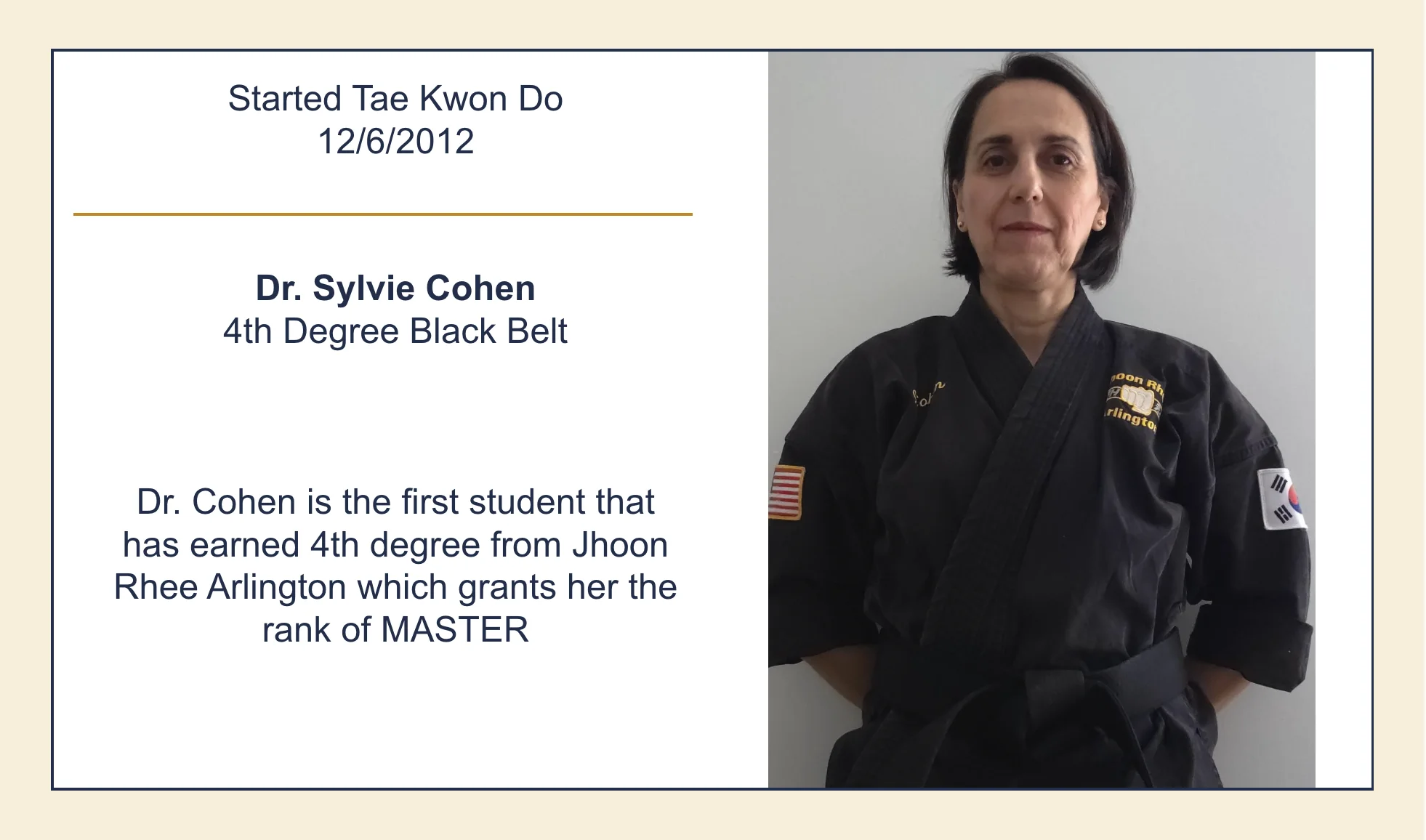
“When I was first told about the topic of this speech, I cringed. The title Master made me very uneasy. How could I be considered a Master in Jhoon Rhee Tae Kwon Do? The title itself felt daunting, almost unfitting. It’s a title that carries weight, expectation, and legacy.
When most lay people hear the word Master, they often imagine someone who knows everything there is to know, who performs at the highest level flawlessly without hesitation. A master may seem almost superhuman, unshakable, and always correct.
The dictionary definition of Master gave me pause — and even a sense of relief. Among the definitions were phrases like: “a worker or artisan qualified to teach apprentices,” “a player of consummate skill,” and “one having control,” as well as “to become skilled or proficient in the use of.” These definitions offered more nuance than the singular image of perfection I had in my head.
Some of these definitions brought me comfort. I have, after all, been teaching and assisting students for more than a decade. I’ve guided beginners through their first stances and kicks, helped intermediate students refine their forms, and encouraged those who were on the edge of quitting to dig deeper.
But the phrase that gave me the most trouble was “a player of consummate skill.” Consummate often implies something supreme, final, even perfect. It describes an ability that is complete, of the highest degree, flawless. And that… felt wrong. Or at least, incomplete. To me, nothing is ever truly perfect. There is always room for growth, always something more to improve. The greatest practitioners continue to learn, revise, and deepen their understanding.
So perhaps being a Master doesn’t mean you are perfect, but that you understand perfection is not the goal — growth is. Being a Master, in my view, means knowing that there is always more to learn, more to uncover, and to that end no one, regardless of their rank or years of experience, has reached the end of the path. It’s realizing that mastery is not a destination, but a mindset — a commitment to lifelong learning, humility, and service.
My own instructors have been instrumental in shaping this perspective. Each one has not only brought exceptional technical skill, but also subtle lessons that extended far beyond the studio. Through them, it was reaffirmed that Tae Kwon Do is not only the technical skills, but it’s about discipline, respect, confidence, perseverance, and responsibility. It’s about how you carry yourself outside of class — at your work, in your home, and in your community. These lessons, often passed down quietly through example rather than words, are the true marks of mastery.
I am reminded of a powerful metaphor shared with us about the history of belt colors. It was said that when a student begins their training, they are given a white belt — a symbol of purity, a blank slate. Over the years, as they gain skill and experience, the belt becomes seasoned with their “blood, sweat, and tears.” Gradually, the white belt darkens, symbolically turning black. This black belt marks the achievement of a significant milestone. But the story doesn’t end there.
As the years pass and the black belt is worn and used, it begins to fray. The fabric weakens, and the inner white core begins to show. Eventually, the belt may become entirely frayed, revealing the white once again. The journey, it seems, has come full circle. This imagery beautifully captures the spirit of a true Master — someone who, despite years of practice and achievement, returns to the mindset of the beginner. Not because they’ve forgotten, but because they’ve learned that the journey never truly ends. They remain open, curious, humble.
To me, that encompasses what it means to be a Master in Jhoon Rhee Tae Kwon Do: not someone who knows everything, but someone who recognizes how much there still is to learn. Someone who embraces both their accomplishments and their imperfections. Someone who teaches not only with words, but with presence and example. Someone who leads, not from above, but alongside.
So, as I stand before you with pride, and gratitude — for my instructors, for the students I have had a chance to interact with, and for the ongoing journey that this art has given me.
The belt I wear may be black, but I strive to always keep a bit of white within it — a reminder that the path of mastery is one of never-ending discovery.”

Recent Comments