
We pride ourselves in helping each student achieve their goals and developing their mental and physical strength. This is what attaining a Jhoon Rhee Tae Kwon Do Black Belt requires.
For some of our candidates this journey to Black Belt began in our Knee High Ninja Program, when they were only four years old!
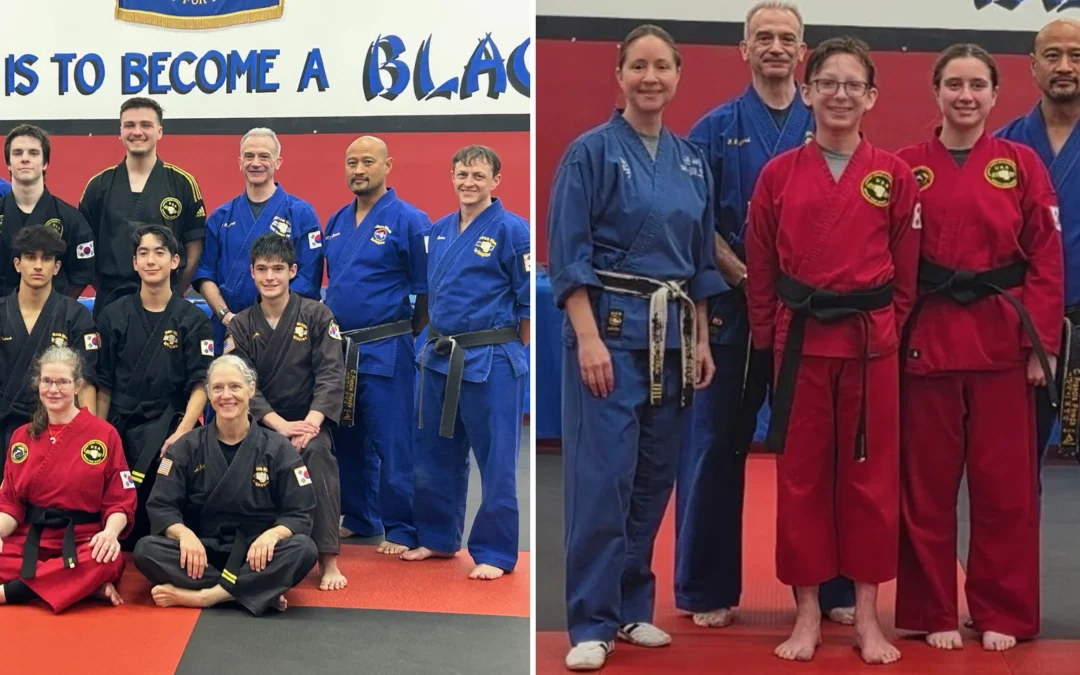
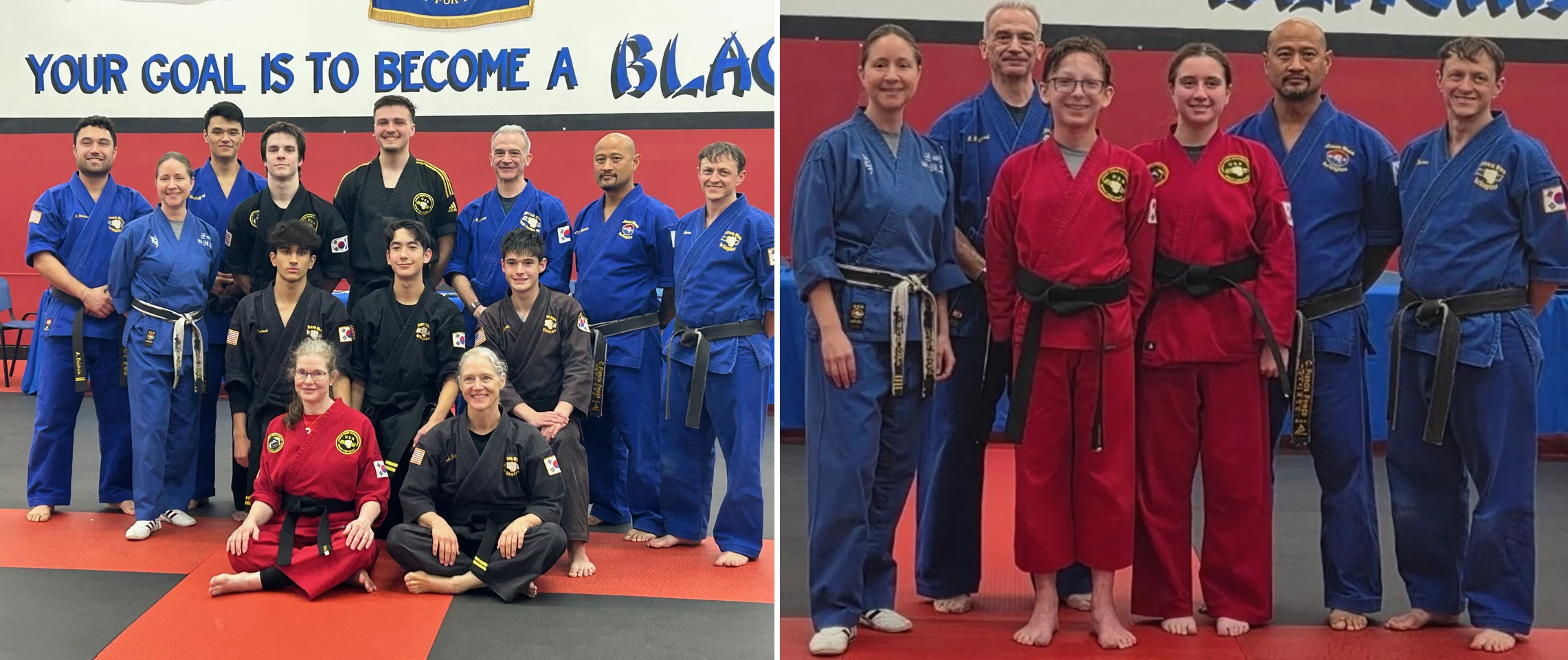
This month, these candidates passed our Arlington Qualifier and the Panel Exam in front of the Jhoon Rhee Masters from Arlington and Falls Church. Our candidates persevered and we would like to present and congratulate our newest Jhoon Rhee Tae Kwon Do Black Belts!
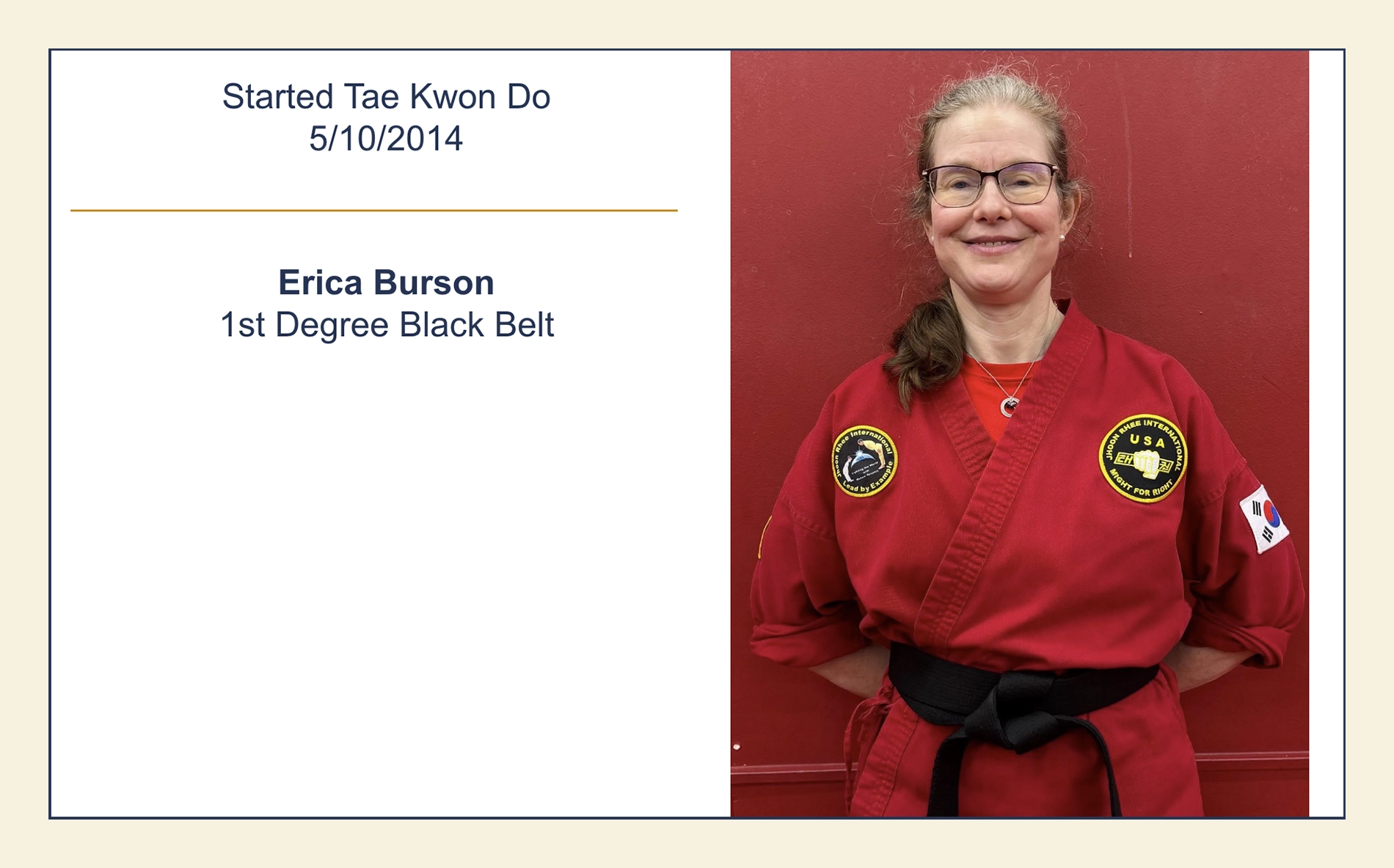
“Mad Max’s words became my mantra for how to approach Tae Kwon Do: constructive thoughts focused on improvement. Instead of labeling my last kick as lousy (which it may have been) and stopping there, I’ve learned to think constructively. Can I improve the next kick by acquiring a target or pivoting fully or engaging quads and core? Working for continuous improvement is how I’ve been able to come this far in Tae Kwon Do.
Because I adopted this outlook for Tae Kwon Do, I have been able to apply a constructive, positive approach to the rest of my life. It has made me a more resilient and effective employee. And, more importantly, it has made me a better parent. My kids know they can come to me and I’ll listen and help them problem-solve. My favorite question is: what did you learn? A constructive, positive attitude has been essential in how I maintain my body so I can do Tae Kwon Do and age well. At 57 years young, I’ve learned that daily work of stretching, strengthening exercises, good posture and movement habits, and regular exercise on a bike and in class are necessary to be able to do Tae Kwon Do without pain. I’ve had to rehab knees, core, shoulders, calf muscles, hips, and glutes. While I (impatiently) waited for one body part to recover, I’ve learned to focus on what I can do: while rehabbing a knee, I can focus on pushups and core; while rehabbing shoulders, work on balance. In the 12 years since I started Tae Kwon Do, through disciplined physical work, I’ve vastly improved my balance, core strength, and overall physical health. This helps me feel better and take better care of my family. And the balance and strength I’ve developed helped me react when a little old lady fell backward into me off a curb. I caught her and prevented both of us from suffering fall-related injuries. None of the physical strength I’ve gained and maintained would have happened without the motivation to attend class, learn, have fun, and be part of an amazing and welcoming community.”
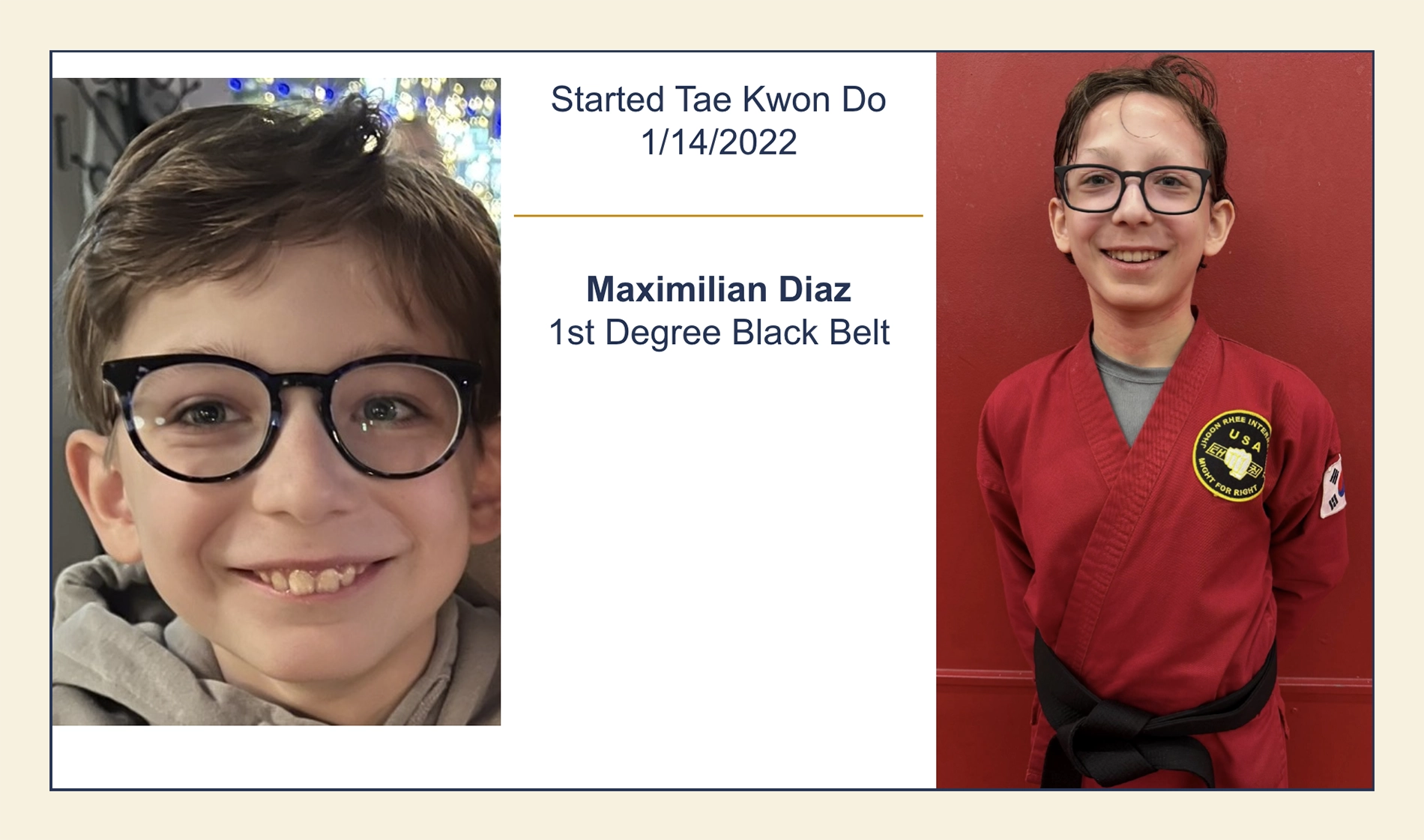
“One mental aspect that Jhoon Rhee Taekwondo has helped me improve is my confidence. Before I started Jhoon Rhee Taekwondo, I was a very shy child. I could not talk to people, hold a conversation, or make friends easily. I was socially awkward, had only one friend, and mostly kept to myself. I would prevent myself from raising my hand in class even if I knew the answer because I feared getting the answer wrong. Jhoon Rhee Taekwondo helped me overcome this by encouraging me to yell in class and take on leadership responsibilities at higher ranks. Leadership played a major role in building my confidence because I had to lead and speak to ninjas to help them improve. Even at red belt, I would say to myself, “If the ninja makes the same mistake one more time, I’ll go correct it”. Then, the class would move on and that ninja would keep on with that problem. However, my leadership skills stepped up when I helped with Ninja Fun Weeks. Not only did I have to lead more than 20 kids for hours at a time, but I also had to communicate with the other helpers. As a result, my confidence has improved significantly. This helps me yell loudly and perform confidently in class, even when I make a mistake. Outside of Taekwondo, I can present school projects, work in groups, and communicate with others. I am also better able to express myself and share the things I am proud of.
Overall, taekwondo has helped me become a better person and a better citizen of my community. These qualities will follow me throughout life, and I am extremely thankful for the opportunity to develop these qualities.”
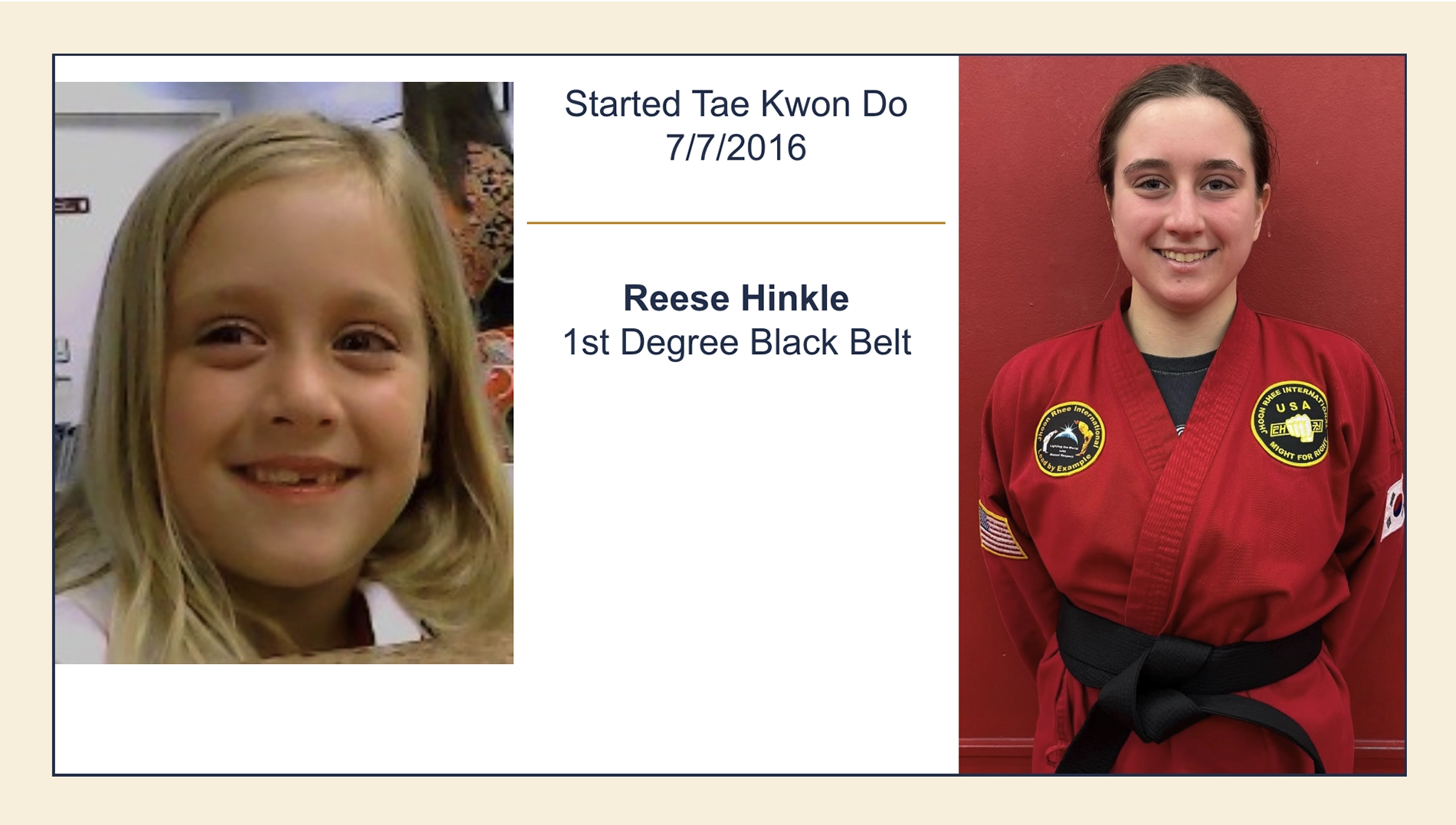
“Taekwondo has helped me face my fears and persevere even when I am scared. My whole life I have struggled with anxiety… Throughout this journey of working for black belt I have pushed myself in ways I did not think were possible and learned so much about myself. I learned that when I am anxious or scared of things I will unconsciously self sabotage. But I want to be able to try to take this test and hopefully pass. And I need to get this essay done in order to do that. I am able to push through and persist because of what Jhoon Ree has taught me. Throughout the years I have learned how to push through and calm myself down in order to go to taekwondo class. I am able to help out with the adaptive program because I really wanted to despite my fears of not being enough or able to because I struggle with the same stuff as some of them do, but I did it afraid. Helping out with the adaptive program has been really healing for me and has made me reflect on myself and be kinder towards myself. This has helped me in school with getting my work done. I am able to turn in my work on time and have it be good work. I am able to get important projects done despite the fact i am terrified of messing up. I am able to do activities that I want to do without panicking, like theater tech and take leadership roles. In my social life I have gained more confidence and am proactive in asking people to hang out with me. These factors have led me to be happier overall and have improved my mental well being.”
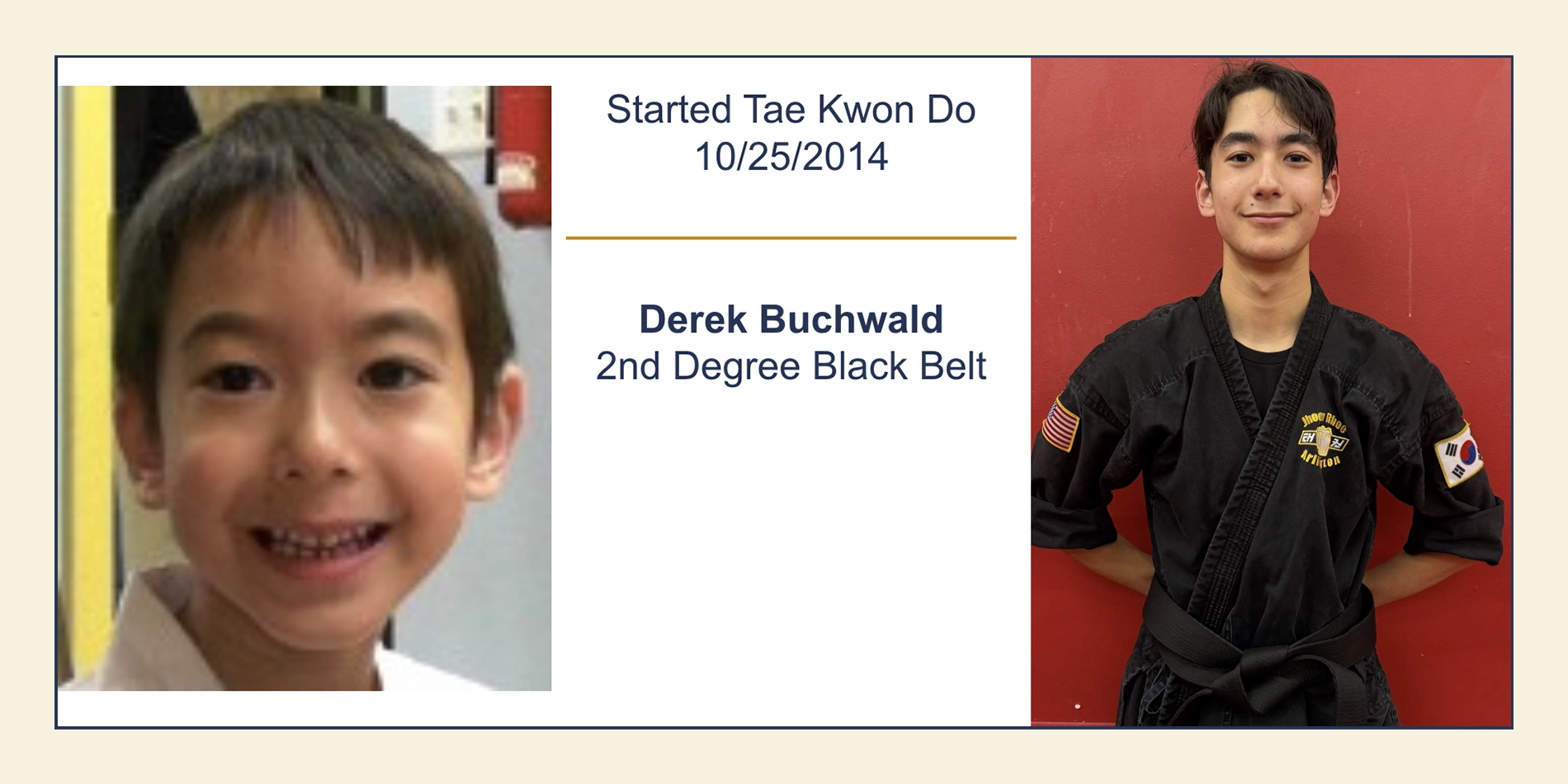
“I taught students from all ranks, backgrounds, and age groups. No matter the age or height difference, I was able to teach with clarity and initiative. It was there I realized, as cliche as it sounds, that I too could become a leader. It’s not so much about your strength or physical prowess, it’s more about knowing how to effectively communicate and teach a class or group. As long as you care about what you teach and how you teach it, nobody cares what you look like, because you’ve already established yourself as a confident leader. While I definitely am stronger and taller now, this mentality has greatly improved my leadership and communication skills, both within and outside Tae Kwon Do. I was able to do an interview and was hired for a mechanical engineering firm, where my communication skills have helped me succeed in a professional setting. My confidence and clear communication has carved out a role in the company, and I handle more complex tasks than some of my peers. In addition, I became the design lead of my robotics team, and I teach others every meeting about computer design efficiently and effectively. I also was elected to become the community service chair of my school’s national honor society, where I plan volunteering opportunities for members. Each meeting I inform others of the opportunities available, and I often lead in-person community service events.”
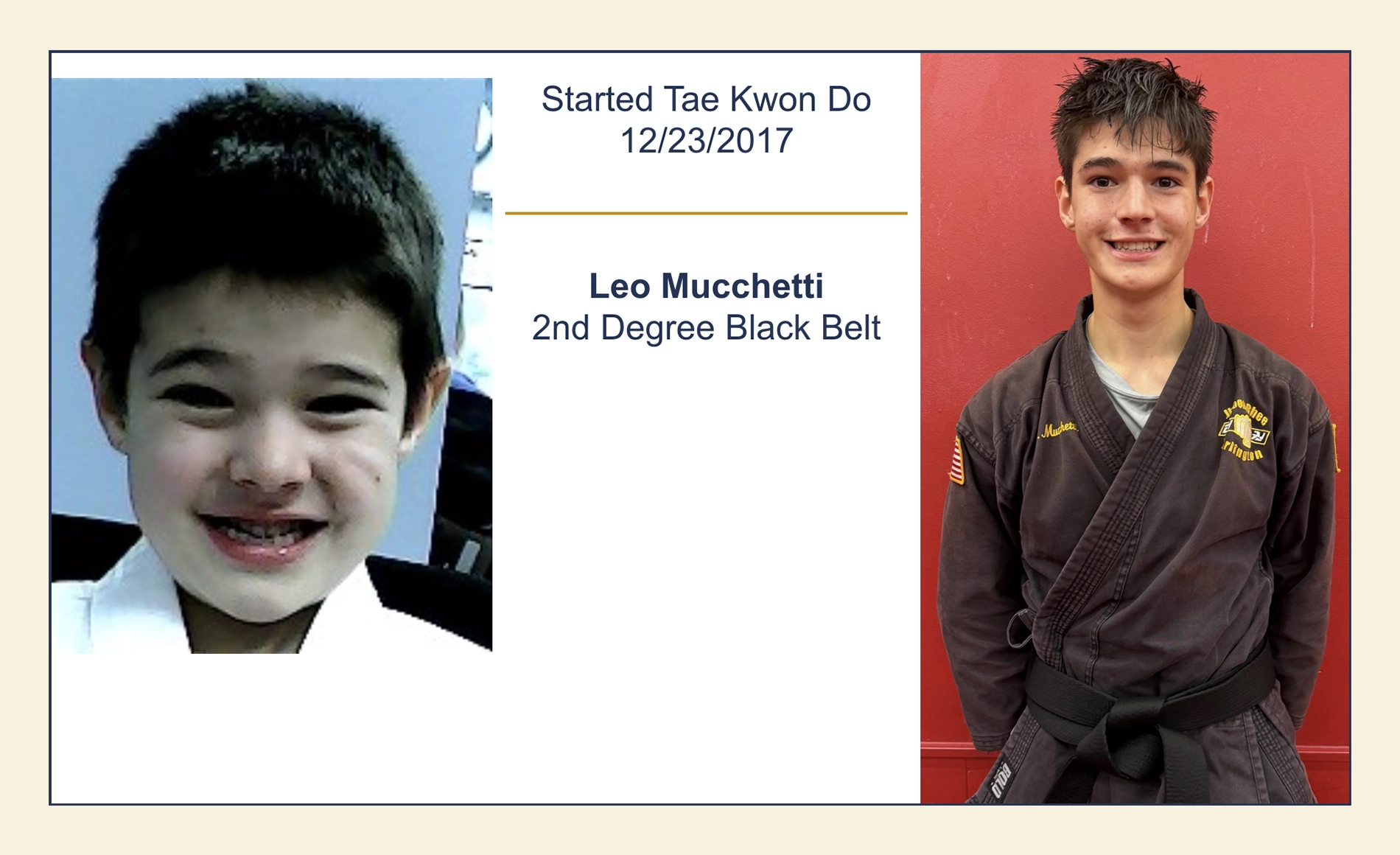
“But along with growing myself physically, I also grew in another way that I hadn’t anticipated: confidence. Before I began tae kwon do, I would almost never raise my hand in school. And when I first walked out onto the mats, I didn’t have the loudest yells. But as I kept coming back to classes, and I kept reciting the student creed, I began to understand the idea of confidence and slowly I started to become confident. I began to have the loudest yells and I would always raise my hand in school. And one day, I would even stand in front of a black belt panel and give a speech about myself, something I could have never imagined myself ever doing. This confidence inspired me to try new things, including activities such as soccer. And when I got to red belt, I was confident enough to sign up for my first leadership class. However, when I stepped onto the mats, I felt like I was back to square one. I had never taught a class, and everything felt new. But more than that, I felt like I could never be a leader to the same degree as the black belt around me. The truth is, they made it look easy. I discovered that it definitely wasn’t something that came easily to me. I overcame this challenge the same way that my confidence was built up: by coming back and trying again and again. Just like before, I began to grow more comfortable and soon enough I enjoyed teaching so much that I readily came back. I also chose to start assisting with more advanced classes. The main lessons I took out of teaching were these: leadership and confidence are very closely connected with each other because to be a leader, you first need to have confidence in yourself, along with persistence. You have to keep coming back and continue on even when you feel discouraged. A leader pushes them outside their comfort zone. In other words, a leader has to first have confidence in themselves to lead and inspire confidence in others.”
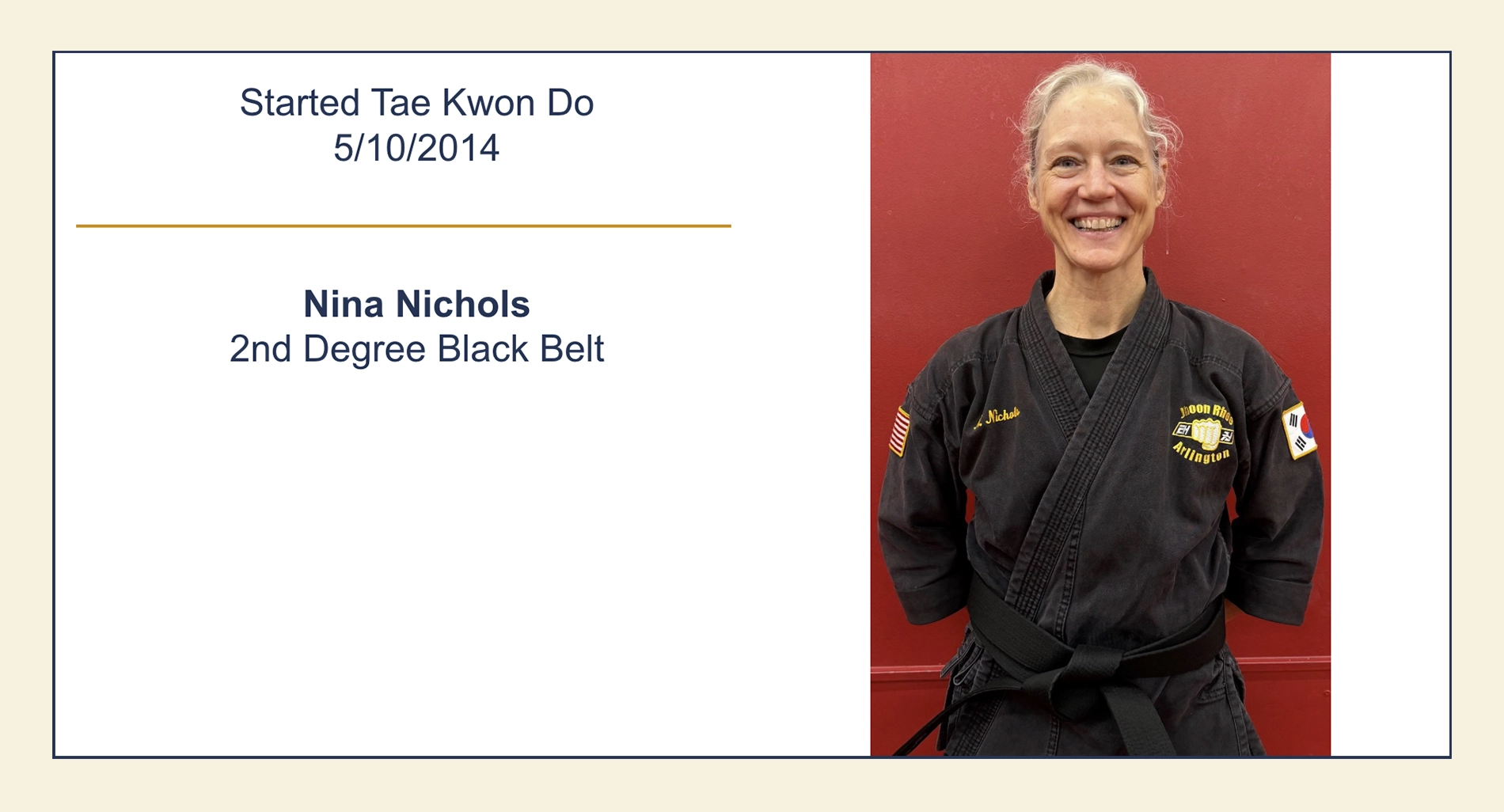
“Teaching Jhoon Rhee Tae Kwon Do has also helped me to be more effective in one-on-one communications. When giving individual instruction, the starting point is an assessment of what level of assistance and feedback will best serve the student, taking into account the student’s level of knowledge and ability, as well as their energy and enthusiasm in the moment. One of the things I learned early on as a helper, especially in the adaptive classes, is to avoid making any assumptions about abilities based on perceived limitations: for example, verbal or comprehension difficulties can co-exist with excellent flexibility and powerful kicks. I’ve worked to improve at noticing, listening and then incorporating observations into positive directions that not only instruct, but also fully engage the student and encourage them to keep trying and improving.
My Jhoon Rhee teaching experience proved very valuable when I started volunteering at a program for older adults with cognitive issues, whose ability to access knowledge and skills varies widely, often unpredictably. Sometimes it takes thoughtful observation and patience to figure out how a participant is doing on a given day, and how much might be asked of them. But it’s always worth trying to figure that out, because participants benefit most when helpers neither intervene too much, which undermines independence, nor expect too much, which invites frustration. Helping with Tae Kwon Do classes has given me great tools to use in working to get that balance right.”
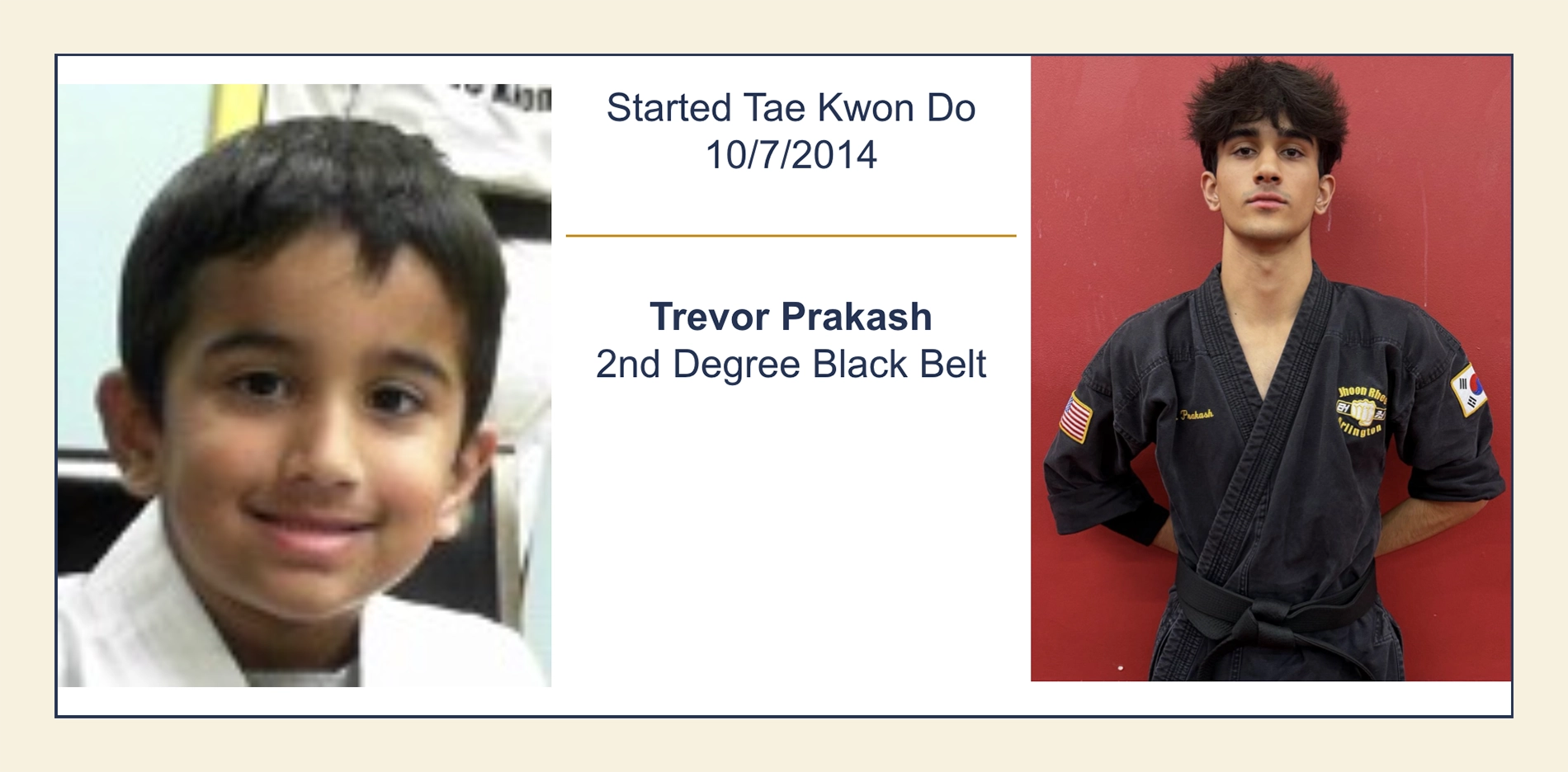
“…in many ways my journey as a teacher, and my journey towards second degree, have been much bigger than just taekwondo. Being a teacher has forced me to consider the implications of how I act and what I say. It has taught me to consider how what I say and do may be interpreted, and to account for how my intentions vary from what actually comes across. This particularly came up in my tone, both when speaking casually and when teaching in classes, where I would say something that gave a much different impression than the denotation of the words themselves. This was something I struggled with for a long time, but gradually, I learned how to correct my tone and moderate my speech. This realization really hit me when I started to work much more closely with the adult class here at Jhoon Rhee Arlington. Teaching adults means teaching people who have taken time out of their busy schedules, and away from their jobs and lives, to come to class and do taekwondo. Being more involved in adult classes made it especially clear to me that I needed to be diligent in my actions. I need to show up and put my best foot forward at all times, on and off the mats. This means being dedicated to my own taekwondo, but also holding myself accountable in all facets of life. Teaching taekwondo has changed the way that I view what it means to grow. Growth is not just presenting yourself when someone’s watching; it’s being conscious and accountable no matter the situation. I’ve learned that in order to truly grow, I need to be the person I know I can be at all times, and not let my emotions or temper get in the way of that. Teaching taekwondo has taught me to strive for constant improvement, something I hope to continue and never stop growing as a teacher, as a martial artist, and as a person.”
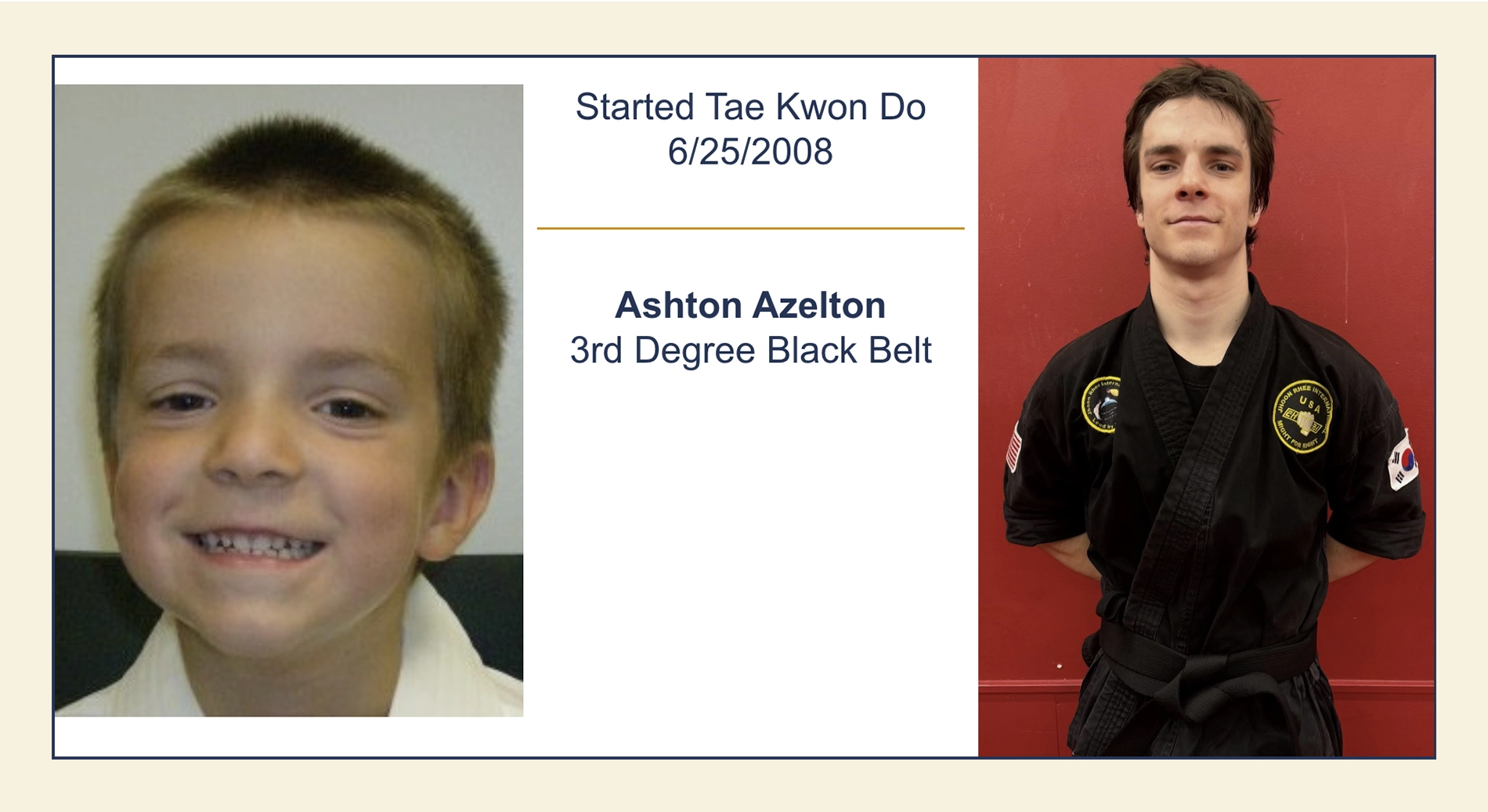
“Jhoon Rhee Tae Kwon Do has provided me with more than I can express. I began in the Knee High Ninja Program at the age of four. I moved to the Junior Program at the age of six. I received my Black Belt at the age of ten, and my second degree at the age of fifteen. Through each instructor, through each belt, through each stripe, through each class, the virtue of self-discipline has permeated my being, allowing me to achieve in various avenues of life. Now, it is not lost on me that the title of my speech is not “What Jhoon Rhee Tae Kwon Do has done for me.” I have already given this speech. However, I have established this for the topic is invariably connected with what I am to talk about—my contribution. I have contributed to Tae Kwon Do at every level. For several years, I competed on the national circuit, bolstering the Jhoon Rhee reputation. Along these lines, I have been part of dozens of demos, drawing eyes and students to the studio. I was among a group who performed Exodus at the U.S. Capital Classics, honoring Grand Master Rhee’s life and legacy. During COVID, I taught classes and worked to help Jhoon Rhee endure during a turbulent period. In college, I studied Kinesiology, with a concentration in Exercise Science. On my summer breaks, and since graduation, I have implemented my knowledge of biomechanics, human physiology and sports psychology to better instruct students. I have trained in other disciplines, including Kickboxing and Muay Thai. This summer, I traveled to Thailand, where I learned new techniques, combat patterns, and philosophies of fighting that I have been able to apply to our sparring. I have even stepped into the professional ring, successfully actualizing what I have learned, proving the effectiveness of Jhoon Rhee’s martial curriculum. However, once again stepping back—back to the very beginning, before even my first class—I still remember the first thing Jhoon Rhee Tae Kwon Do ever taught me. I remember sitting in my dining room, fidgeting in a worn-wooden chair, impatiently reciting the words that my mother was reading to me. These words… these words I would come to say a hundred times, a thousand times—a thousand-thousand. At Jhoon Rhee Tae Kwon Do, whether one is four years old or seventy, everyone earns their white belt the same way. Master Pineda has said, quoting Grand Master Rhee, that first, one learns the Student Creed, then they understand it, then they live it. Indeed, I have built true confidence through strength in my body, honesty in my heart, and knowledge in my mind. And through this, I have endeavored—and will continue to endeavor—to build a strong and happy community.
Yes, undoubtedly, this has been my greatest—my deepest—contribution, for it is the summation of my contributions. I have been blessed with the opportunity to pass on what Jhoon Rhee Tae Kwon Do has imparted upon me unto others..”
Recent Comments